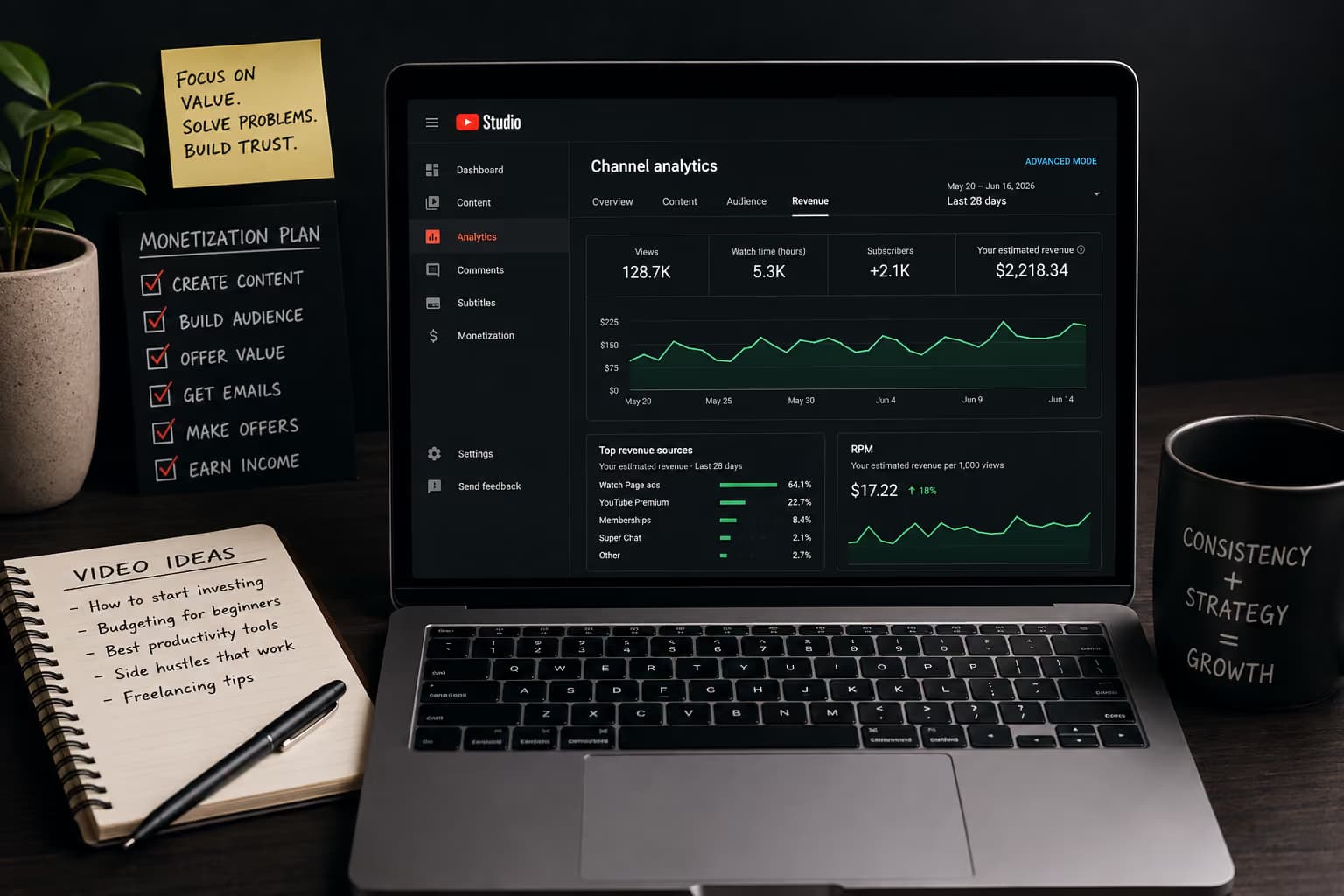
How to Monetize a YouTube Channel Before (or Without) Hitting 1,000 Subscribers
The classic path to YouTube ad revenue is clear: join the YouTube Partner Program. That currently requires 1,000 subscribers plus either 4,000 public watch hours in the past 12 months or 10 million Shorts views in the past 90 days. There is also a lower tier at 500 subscribers that unlocks some fan-funding features, but full ad revenue sits behind the higher bar.
Meeting the numbers does not automatically guarantee approval. Content originality, community guidelines compliance, and a properly set up AdSense account all matter. Approval often takes around a month; rejections usually mean waiting another 30 days (or 90 after a second rejection) before trying again. Tools that help with titles, thumbnails, and A/B testing can speed up growth, and staying active on the Community Tab helps maintain channel health during upload gaps.
Still, thousands of creators generate real income long before those thresholds—or even while waiting for approval. One creator recently passed 1,000 subscribers but was still short on watch hours, yet earned more than $10,000 in a single month from the channel. The difference? Treating YouTube as a discovery and relationship engine rather than waiting for AdSense checks.
Here is the practical system that makes that possible.
Step 1: Create Content People Are Already Searching For
Do not make videos just to chase views. Make videos that solve specific problems for the exact audience you can help.
Go to YouTube search and type the questions or tasks your ideal viewer types. For a fitness coach that might be “how to bench press,” “how to bench press for beginners,” “how to bench press more weight,” or “what grip for bench press.” Pull the suggested results and related searches. Expand with letter variations (“how to bench press a…”) and “what” questions. Build a simple list of proven topics.
You can also study successful creators in your space (and even outside it) for structure and packaging ideas—without copying. Look at their most-watched videos for title patterns, thumbnail styles, and topic angles that already work. Then adapt them to your voice and expertise.
The goal is search-driven content that attracts people who already want the result you help them achieve. Those viewers are far more likely to take the next step with you.
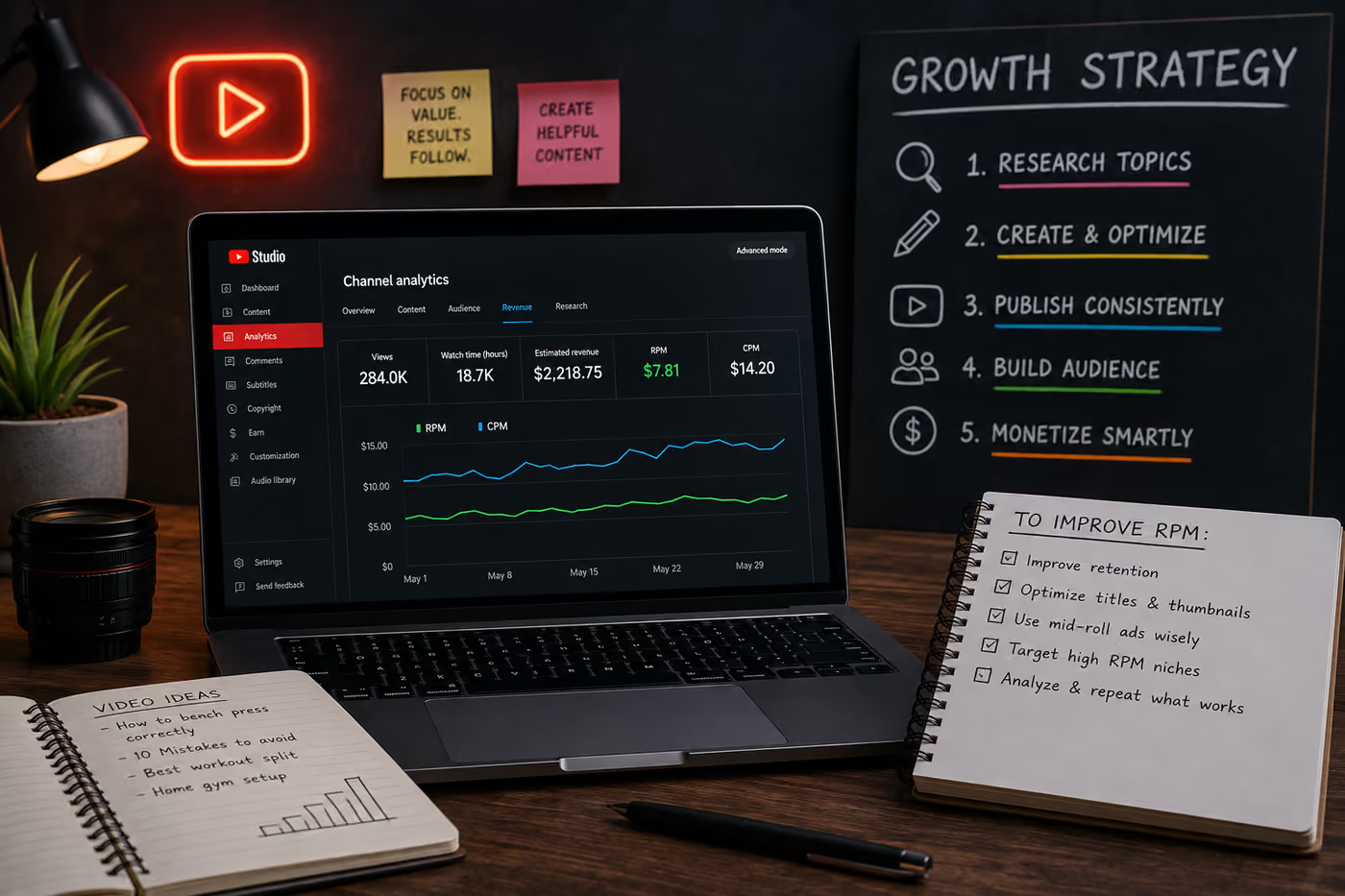
Step 2: Get the Right People Off YouTube
YouTube wants viewers to stay and watch more ads. As a smaller creator, your priority is different: build a direct relationship so you can make offers on your own terms.
The simplest way is a lead magnet—something free and valuable offered in exchange for an email address. Ask yourself: What persistent problem does my audience face, and how can I solve a piece of it quickly in a short PDF, checklist, or short video?
Examples:
- Fitness: a one-page “perfect bench press cues” checklist
- Any niche: a short guide, template, or mini-training that delivers fast value
Create a simple landing (squeeze) page that describes the free resource and collects the email. Tools like Kajabi, Leadpages, ConvertKit, or similar make this straightforward.
Then mention the offer naturally inside your videos: “If you want the five cues that make every bench press cleaner, grab the free checklist at [your link].” Repeat the offer in the description and pinned comment. Every video becomes an employee that finds the right people, delivers value, and moves them onto your list—where you control the relationship.
Step 3: Turn Attention into Offers with a Simple Funnel
Once someone opts in, do not just say “check your email.” Use the thank-you page.
Add a short message or video that acknowledges their interest and makes a relevant next-step offer: a low-ticket product, a consultation call, a course, or an affiliate recommendation that fits. Example: “Thanks for grabbing the checklist. If you’re serious about adding serious weight to your bench, you can book a short strategy call with me below.”
That single extra step turns passive viewers into potential clients or customers. One creator described a viewer who binge-watched about ten videos, opted in, booked a call, and paid in full for coaching—because the content had already built trust.
The full loop looks like this:
- Search-optimized, helpful videos attract the right audience.
- Lead magnet moves them to your email list.
- Thank-you page (and follow-up emails) present offers.
- You earn from affiliates, digital products, coaching, or services—regardless of whether YouTube has approved you for ads yet.
You Still Want the Partner Program—But You Don’t Have to Wait
Hitting the official thresholds remains valuable. Ad revenue is passive once it starts, and the Partner Program opens additional features. Keep publishing consistently, improve titles and thumbnails, protect watch time, and stay within policy so you can apply as soon as you qualify.
In the meantime, the system above lets the channel pay you. Many creators also add performance-based options that do not require high subscriber counts. Platforms like Wayo Ads let creators earn from validated views and clicks by connecting directly with brands—another practical way to monetize attention while (or instead of) waiting for traditional YPP approval.
YouTube does not have to be an all-or-nothing game. Create content that solves real problems, move interested viewers onto a list you own, and present offers that help them further. That approach turns a growing channel into an income source long before the official monetization badge appears—and keeps working after it does.
Exploring tools that reward validated attention—such as those available through Wayo Ads—can sit alongside that system.
Sources
https://www.youtube.com/watch?v=lN67Kl_7jsA
- How To Monetize a YouTube Channel WITHOUT Subscribers (Profit Your Knowledge)
- 5 Ways to Monetize Your YouTube Channel Without 1,000 Subscribers (InsiderFinance)
Source & Resources
Official documentation, research, and high-authority sources: