
Two creators can post videos with the exact same view count and topic—yet one drives 1,400 sales while the other drives 12 (Babbl Labs).
The difference isn't channel size or production budget. Experienced brand marketers evaluate YouTubers through the lens of buyer-audience overlap, worst-case view floors, and audience trust. When you understand the metrics brands actually care about, you can position your channel to command higher rates and land consistent sponsorships.
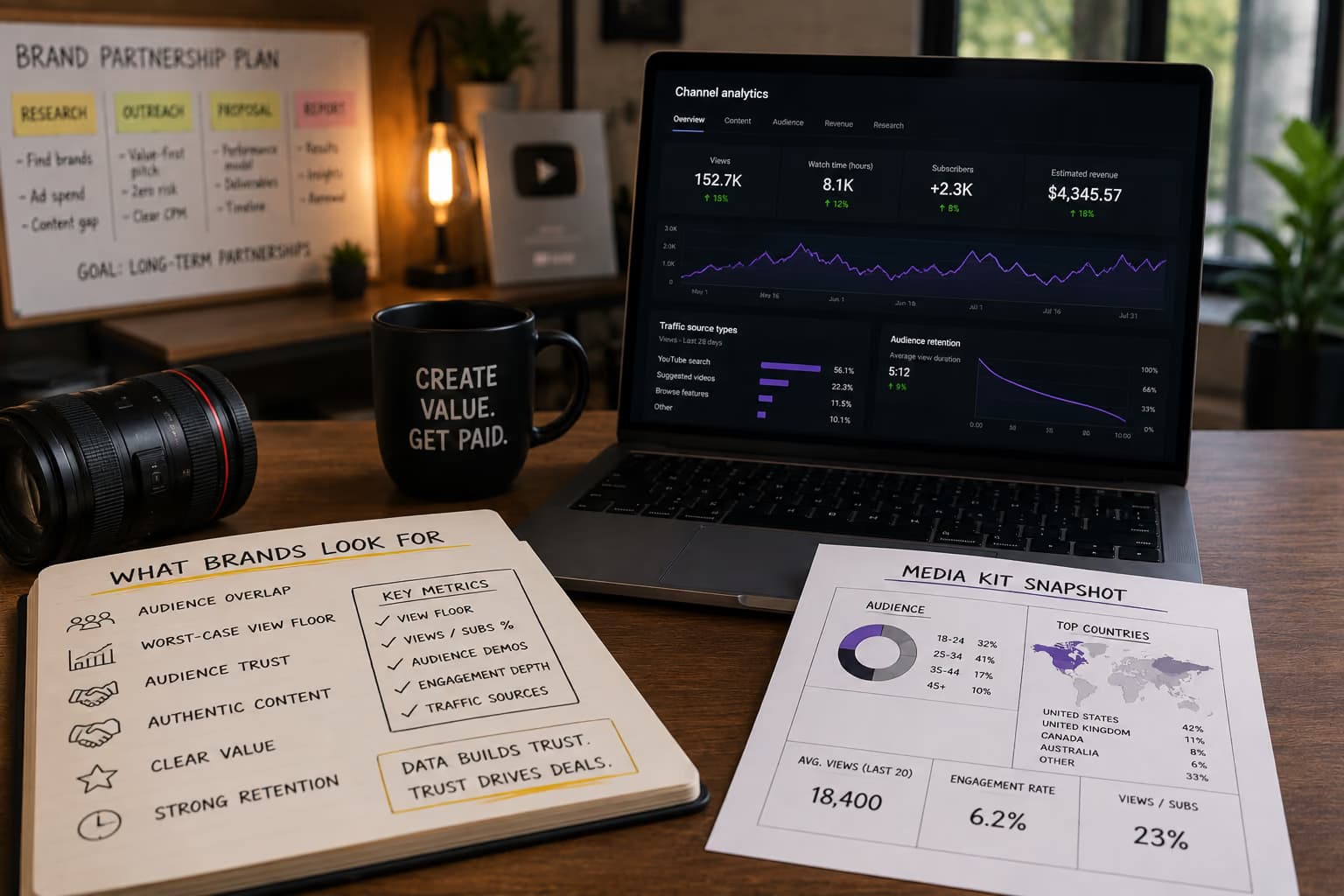
What Brands Are Actually Buying
Brand marketers don't treat creator sponsorships like paid ads or UGC. They look for three core dynamics before spending a single dollar (Babbl Labs):
Trust over reach. Paid ads buy guaranteed impressions; creator deals rent the existing relationship and trust between a creator and their community.
High-consideration fit. Sponsorships perform best on products that require a customer to “stop believing something” before buying (high price points, steep learning curves, or habit shifts). Impulse buys usually lose to cheaper ads.
The audience, not the influencer. Marketers target who is watching, not who is speaking. A mukbang or high-calorie food channel is a poor fit for a calorie-counting app, while a non-fitness creator with an engaged, health-conscious audience can outperform an industry expert.
The brand-side cut of that selection problem lives in Why Every Brand Needs a Creator Selection Strategy. This article is the creator-side: what to put in front of the manager.
The Metrics That Decide Deals (And What Marketers Ignore)
Experienced brand managers scan for performance indicators that predict sales rather than superficial vanity metrics (engagement vs sub counts).
| Ignore (vanity) | Evaluate (predicts performance) |
|---|---|
| Total subscriber count | Worst-case view floor |
| Total lifetime channel views | Views-to-subscribers ratio |
| Days since last upload | Audience location vs. creator location |
| Creator's physical location | Comment depth and viewer mindset |
Brands already running YouTube creator deals are often easier to pitch because they already know how to read these signals (ChannelCrawler).
Key performance signals
Worst-case view floor. Marketers pull your last 100 uploads, drop the 10 lowest performers, and take the average. They set their expected CPM off this baseline so the deal remains profitable even if a video underperforms.
Views-to-subscribers ratio
- Under 5%: Signals a historical / inactive audience (high cost, low return).
- 10% – 30%: Healthy engagement; audience actively returns for new uploads.
- Over 30%: Content is algorithmically driven beyond the subscriber base (often underpriced for advertisers).
Audience demographics. Brands care where your viewers log in from, not where you live. Viewership from non-shippable countries drops a channel's effective value instantly.
Authentic ad execution. Offloading ad reads to automated scripts or agency templates kills conversion rates. Marketers look for creators who weave brand integrations naturally into their own voice.
Expected Pricing Benchmarks (2026)
Most initial brand deals land between $500 and $5,000 based on expected view floors across long-form content (Babbl Labs). Niche CPM corridors in 2026 often sit around $20–$60 per thousand expected views, with high-intent categories (finance, business) at the top and high-volume entertainment lower per view but more expensive per integration because of scale (Influesque).
| Metric | Industry standard benchmark |
|---|---|
| Typical CPM range | $20 – $60 per 1,000 expected views |
| Faceless channel pricing | ~66% of standard rate (lower relational trust) |
| Long-form vs. short-form | Long-form commands higher rates due to deeper audience attention |
Quote from the floor, not the spike. Unbundle extras with How to Price Your YouTube Sponsorships.
How to Prepare Your Channel for Brand Outreach
- Audit your view floor. Calculate your worst-case view average so you can quote realistic, defensible rates.
- Keep analytics ready. Have screenshots of your YouTube Studio demographics (age, gender, top countries) prepped in a media kit.
- Demonstrate point of view. Brands favor creators who pick topics deliberately over those who chase viral trends, as trend-chasing audiences show up for entertainment rather than recommendations.
Lead outreach with overlap and floor, not subscriber count (value-first pitch under 1K).
Performance Campaigns That Buy the Same Signals
Traditional sponsorships still reward trust and overlap. Wayo Ads lets brands buy the performance layer directly: fixed CPM on validated video or Shorts views, or CPC on tracked clicks. There is no minimum follower requirement, the fee is transparent (about 5% — creators keep the large majority), and anti-fraud checks keep the activity genuine. That is how you get paid on the view floor marketers already use, without waiting for a flat-fee greenlight (Creator Monetization Beyond AdSense).