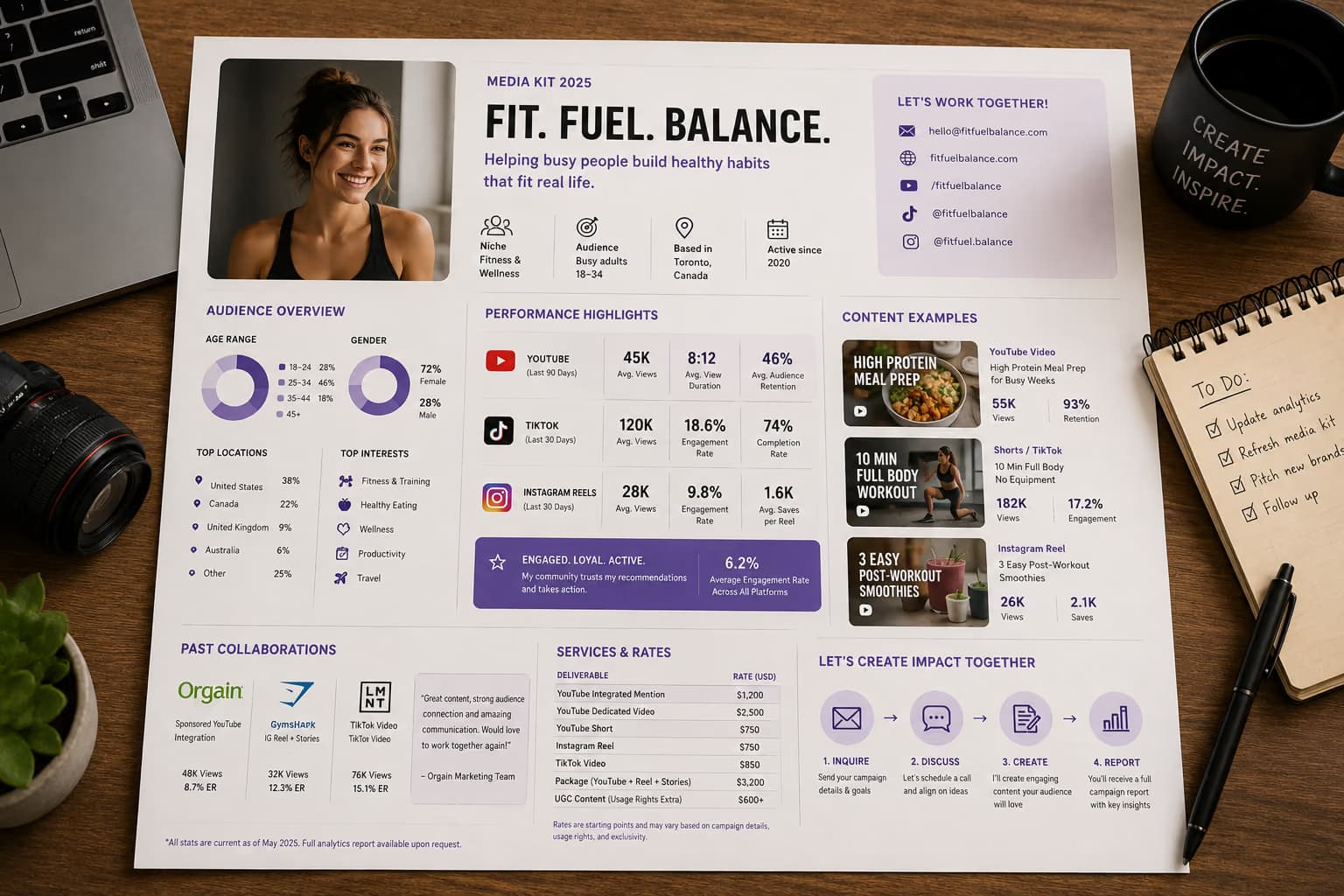
A media kit is no longer optional. Roughly three-quarters of brands now request one before moving forward with a creator partnership (Promote cites Influencer Marketing Hub’s 2025 benchmark at 73%). Creators who have a clear, data-backed kit close deals faster and often negotiate higher rates than those who pitch with only a profile link or follower count.
For small and micro creators the kit is especially powerful. Brands increasingly value engaged niche audiences over large but passive ones. Nano creators frequently post higher engagement rates than macro accounts, and a professional media kit turns that advantage into proof brands can evaluate in under a minute.
What a Media Kit Actually Is
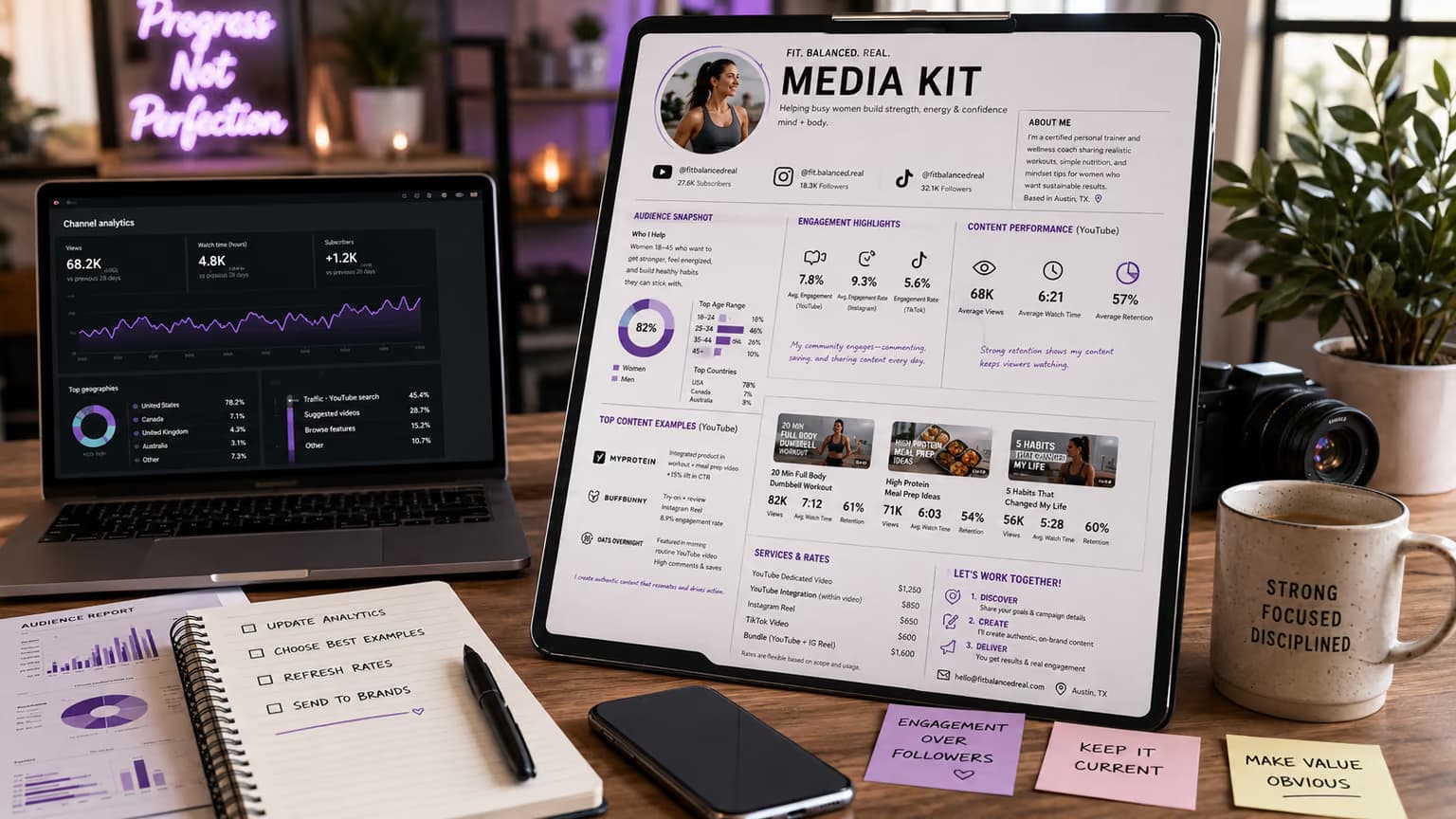
Think of it as your professional résumé for brand partnerships. It answers four questions quickly (MYB Workshops):
- Who are you and what problem do you solve for your audience?
- Who follows you (demographics and interests)?
- How engaged is that audience, and what results have you delivered?
- What does it cost to work with you, and how do we start?
A rate card (pricing only) is useful, but a full media kit is stronger because it supplies the context and proof that justify the rates. Pair it with the 60-second “brand manager test” in Landing Your First Brand Deal.
The Core Sections Every Kit Needs
1. Bio and positioning
Two to three sentences that name your niche, audience, and unique angle. Specific beats vague. “I help busy parents stay fit with 15-minute home workouts” is far more useful than “fitness creator.”
2. Audience demographics
Age ranges, gender split, top locations, and interests. Brands care more about fit than total size. Pull these numbers directly from platform analytics and present them clearly (percentages or simple charts work well).
3. Performance metrics that prove engagement
Engagement rate is the metric most brands rank highest. Include average views or reach, retention or completion rates where relevant, and growth trends. Highlight platform-specific numbers:
- YouTube: average views, watch time, audience retention
- TikTok / Shorts: average views, completion rate, engagement
- Instagram: Reels performance, saves, shares, story completion
Show that engagement is real—thoughtful comments, consistent interaction, no obvious bot patterns.
4. Content portfolio and case studies
Three to five strong examples with actual metrics underneath. If you have past brand work, include results (reach, clicks, sales if available) and a short testimonial. New creators can document organic campaigns or personal product recommendations as proof of concept.
5. Transparent rate card
List clear prices by deliverable (single post, Reel/Short, integrated YouTube mention, package, UGC, etc.). Tiered options (basic / standard / premium) and notes on multi-post discounts or usage rights help brands self-select. Vague “rates negotiable” language slows deals. Anchor numbers with How to Price Your First Brand Deals.
6. Contact and process
Professional email, primary handles, website or link-in-bio, and a simple outline of next steps (inquiry → call → contract → delivery → report). Remove friction.
One clean page is usually enough. Multi-page documents often go unread.
Design and Presentation Tips
Keep branding consistent with your content (colors, fonts, photo style). Prioritize mobile viewing—most brand managers review kits on phones. Use white space, clear hierarchy, and visual data where it helps. Templates from Canva or dedicated media-kit tools are perfectly fine; polish matters more than custom design.
Update the kit at least quarterly, and immediately after any strong campaign or meaningful growth in metrics. Stale numbers signal inactivity.
Common Mistakes That Cost Deals
- Outdated metrics
- Missing or vague demographics
- No rates listed
- Generic bio
- Inflated or unverifiable engagement claims
- Unprofessional presentation or typos
Brands can spot these quickly. Clean, current, specific data wins.
How Small Creators Turn the Kit into Deals
Attach or link the kit in every outreach email (pitch templates). Keep a version in your bio or link-in-bio for inbound interest. Customize slightly for high-priority brands (highlight the metrics or case studies most relevant to their category) while keeping the core consistent.
A strong kit also works on creator marketplaces and performance platforms. It signals professionalism and supplies the exact proof brands need.
Layering Media Kits with Performance Opportunities
Sponsorships remain valuable, yet they are only one revenue stream. While you build and use your media kit for traditional brand deals, many independent creators also monetize validated attention through platforms that do not require large followings or lengthy approval processes (Creator Monetization Beyond AdSense).
Wayo Ads connects brands with creators via performance campaigns that pay on verified video or Shorts views (or tracked clicks). There is no minimum follower requirement, the fee structure is transparent (about 5% — creators keep the large majority), and campaigns focus on genuine engagement. A clear media kit still helps you stand out when applying, but the platform itself removes many of the traditional gatekeeping barriers.
Quick Start Checklist
- Pull current analytics from every platform you use.
- Write a specific 2–3 sentence bio and list your strongest demographics and engagement numbers.
- Select 3–5 best content examples with metrics.
- Set transparent rates by deliverable.
- Design a clean one-page PDF or interactive link.
- Update quarterly and after every notable campaign.
- Use the kit in outreach, marketplaces, and performance applications—including those on Wayo Ads.
Small creators win when they make engagement visible, verifiable, and easy to evaluate. A focused media kit does exactly that. Build it once, keep it current, and let the data do the selling.