From Ad Reads to Aisles: How YouTube Creators Land Retail Deals With Sephora

For years, the dominant revenue model for YouTube creators has been the ad read. A brand pays a creator to mention a product for 60 seconds, the video goes live, and the deal is done. But a growing number of creators are now chasing something far more ambitious: shelf space at major retailers like Sephora. The conversation has shifted from "how much should I charge for an integration?" to "how do I become a supplier?"
That shift is the subject of the video "Why YouTubers Want to be in Sephora," published by Colin & Samir on October 23, 2026. The video, which had drawn 11,945 views, 240 likes, and 10 comments at the time of analysis, taps into a question that more creators are asking as their audiences mature and their product lines grow. The transcript is unavailable, but the premise is clear enough: retail placement represents a new frontier for creator brands, and it operates under rules that most YouTubers have never had to learn.
Why Retail Is a Different Game From Sponsorships
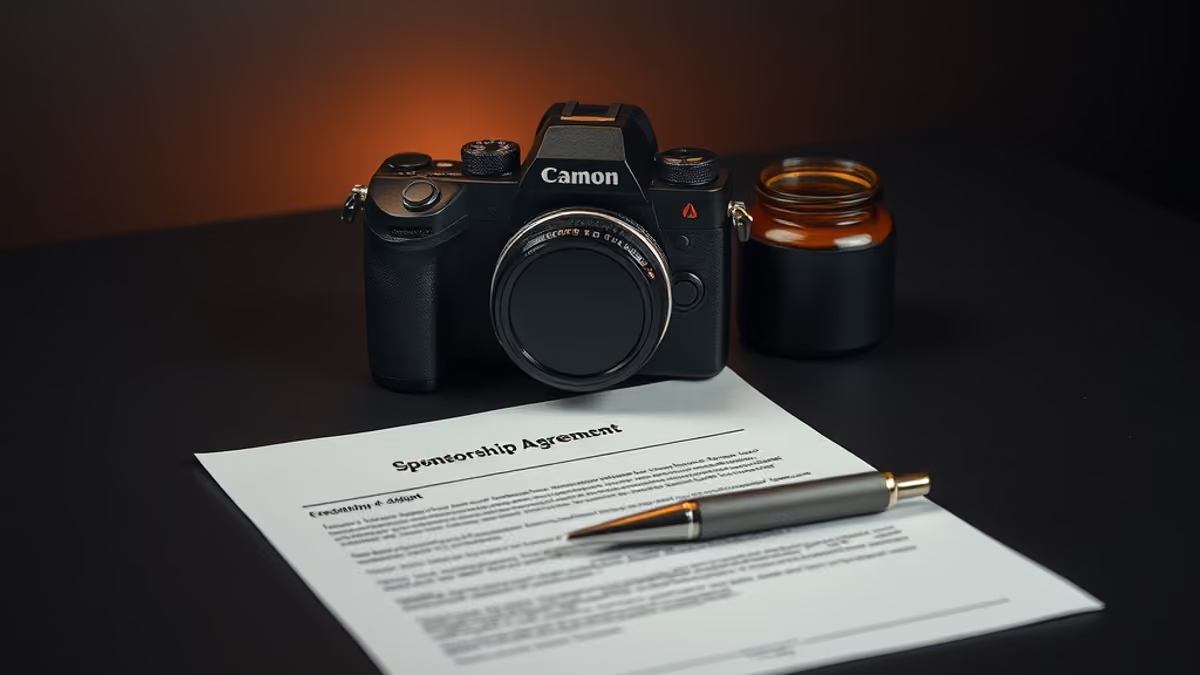
An ad-read sponsorship is a marketing transaction. The creator is the media channel, and the brand is the advertiser. The creator's job is to deliver attention. The brand's job is to pay for that attention. Once the video is published, the relationship is essentially complete.
Retail distribution is a supply chain transaction. The creator is no longer the media channel; the creator is the manufacturer. The retailer is the customer. The creator's job is to deliver a product that sells through at a rate the retailer considers acceptable. If the product doesn't move, the retailer drops it. If it does move, the retailer reorders. That is a fundamentally different relationship, and it requires a fundamentally different skill set.
This is the core insight that many creators miss. Audience size does not translate directly into retail success. A creator with two million subscribers can drive a spike in traffic to a product launch, but a Sephora buyer is not evaluating your subscriber count. They are evaluating your wholesale price, your margins, your packaging, your fulfillment capacity, and your ability to keep product in stock across hundreds of stores.
Creators Must Become Suppliers, Not Just Promoters

The transition from promoter to supplier is the hardest part of the retail journey. When you sell an ad read, you are selling access to your audience. When you sell to a retailer, you are selling a physical product at a wholesale price that leaves enough margin for the retailer to make money.
That means understanding retail economics. A retailer like Sephora typically operates on a keystone or near-keystone margin model. If your product retails for $30, the retailer may expect to buy it from you for somewhere in the range of $12 to $15. Out of that wholesale price, you need to cover your cost of goods, your packaging, your shipping, and still leave yourself a profit. If you have only ever sold direct-to-consumer at full retail price, that math can be jarring.
You also need to think about supply chain logistics. A direct-to-consumer brand can get away with shipping orders from a garage or a small fulfillment center. A retail brand needs to meet the retailer's compliance requirements, which often include EDI (electronic data interchange), barcode standards, on-time delivery windows, and chargeback penalties for late or incomplete shipments. None of this has anything to do with making videos, and all of it is non-negotiable if you want to stay on the shelf.
What Retail Buyers Actually Look For
Retail buyers are a distinct audience from YouTube subscribers. A subscriber watches your videos because they like your personality, your content, or your perspective. A buyer at Sephora is looking at your product line through a completely different lens: sell-through rate, margin structure, category fit, and brand positioning.
Before approaching a retail buyer, creators should build a direct-to-consumer sales history. A buyer wants to see evidence that your product actually sells. If you have six months of consistent DTC revenue, a healthy repeat purchase rate, and strong reviews, you have a story to tell. If you have a large YouTube audience but no sales data, you have a marketing asset, not a retail business.
Product-market fit matters more than audience size. A beauty creator with 100,000 engaged subscribers and a skincare product that sells out every DTC drop is a more compelling retail candidate than a generalist creator with five million subscribers and a product that has never been tested in the market.
Packaging also matters more than most creators expect. On a Sephora shelf, your product is competing with established brands that have invested heavily in design. If your packaging looks like it belongs on a folding table at a convention, a buyer will pass. Retail is a visual environment, and your product has to earn its place on the shelf.
Case Studies: Creators Who Made the Leap
The beauty and wellness categories offer the clearest examples of creators who have successfully transitioned to retail. Several creator-founded brands have moved from DTC launches into Sephora, Ulta, or Target over the past few years. The pattern is consistent: the creator builds a product with a clear point of view, proves demand through direct sales, refines the packaging and pricing, and then approaches retail buyers with data rather than just audience metrics.
What these case studies share is patience. The timeline from YouTube launch to retail shelf placement is rarely short. It often takes two to three years of DTC selling before a brand is ready for retail. Creators who expect to land a Sephora deal six months after launching a product are usually disappointed.
The revenue comparison between ad reads and retail distribution is also worth understanding. An ad read is a one-time payment. A retail placement is a recurring revenue stream that can scale far beyond what any single sponsorship can deliver. But it also comes with inventory risk, cash flow pressure, and the possibility that the product simply doesn't sell through. Retail is not a guaranteed payday; it is a business.
How to Prepare for a Retail Pitch
If you are a creator who wants to move into retail, start by treating it as a separate business line, not an extension of your YouTube channel. Build your DTC sales history first. Get your unit economics right. Understand your margins at wholesale pricing. Invest in packaging that can compete on a shelf. And most importantly, learn to speak the language of retail buyers.
Retail buyers care about sell-through, margin, and replenishment. They do not care about your view count. If you walk into a buyer meeting and lead with your subscriber numbers, you have already lost the room. Lead with your sales data, your repeat purchase rate, and your plan for keeping the product in stock.
Retail distribution is a new revenue frontier for creator brands, and Sephora represents the most visible symbol of that shift. But the creators who succeed in retail will be the ones who understand that shelf space is earned through operational excellence, not audience size. The ad read is not going away. But for creators who want to build something that outlasts the algorithm, the aisle is the next frontier.
For more on how to position yourself for brand partnerships, read our guide on what brand marketers actually look for when sponsoring YouTubers and how to price your YouTube sponsorships.
What to do next
Discover brand opportunities on Wayo Ads
Source & Resources
Official documentation, research, and high-authority sources: