Social Commerce in 2026: TikTok Shop, YouTube Shopping, and What It Means for Creator Marketing
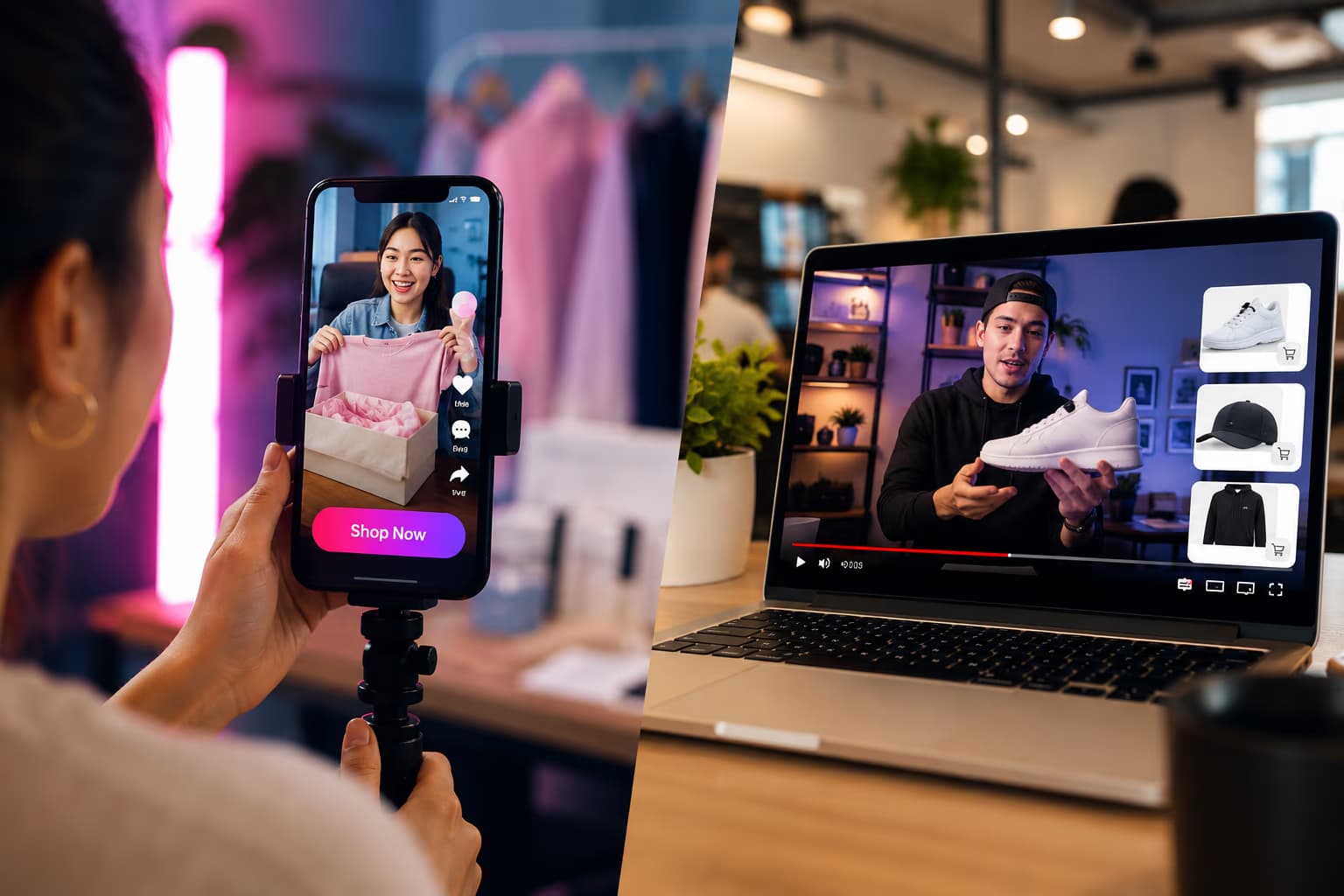
The 2026 Guide to Social Commerce: Platforms, Creators, and Strategy
Social media has woven commerce directly into the daily scroll. In 2023, social commerce was a footnote in most brand strategies; in 2026, it is the primary growth engine for direct-to-consumer (DTC) brands and the fastest-rising income stream for creators.
For consumers, the upside is frictionless purchasing. For brands, integrating platforms like TikTok Shop and YouTube Shopping is no longer an option—it is a baseline requirement for staying relevant and scaling revenue.
What is Social Commerce?
Social commerce allows customers to discover, browse, and buy products directly on social platforms—without ever leaving the app. While traditional e-commerce relies on driving traffic to a dedicated website or storefront, social commerce shortens the path to purchase to just a few taps.
Brands that succeed understand that these two channels work best together. Social commerce leverages community and creators to capture attention, while e-commerce infrastructure handles the seamless checkout and fulfillment.

Core Benefits of a Social Commerce Strategy
| Benefit | Brand Impact | |---------|--------------| | Shortened Path to Purchase | Removes friction by taking shoppers straight from product discovery to checkout. | | Data & Insights | Platform analytics reveal what audiences want, allowing for highly targeted content. | | Boosted Conversions | Turns posts, creator content, and bio links directly into active sales pathways. | | Global Reach | Reaches international audiences without the overhead of physical retail expansion. | | Real-Time Engagement | Utilizes live shopping and AR try-ons to create memorable, personal buying experiences. |
The Platform War: TikTok Shop vs. YouTube Shopping
The social commerce landscape in 2026 is dominated by two massive players, each serving a distinct stage of the buyer journey.

TikTok Shop: The Conversion Machine
TikTok Shop has matured into one of the most efficient commerce channels available, with a projected $23.4 billion in US Gross Merchandise Value (GMV) for 2026. Its native checkout keeps users in the app, eliminating external-link drop-off.
- Conversion Power: Averages a 4.7% conversion rate—roughly 2.5× higher than traditional e-commerce.
- The Affiliate Engine: 60–70% of TikTok Shop GMV is driven by affiliate creators, not official brand accounts.
- The Halo Effect: Content on TikTok drives a 30–50% incremental revenue boost on outside channels like Amazon and direct-to-consumer sites.
YouTube Shopping: The Trust Engine
Where TikTok wins on impulse, YouTube wins on consideration and trust. Long-form content like deep-dive tutorials and reviews naturally supports higher Average Order Values (AOV).
- Steady Growth: Generating $8.6 billion in US GMV, growing at 45% year-over-year.
- Seamless Integration: Syncs directly with existing e-commerce backends like Shopify to reduce friction.
- Long-Term Returns: Product reviews on YouTube continue to generate affiliate revenue months after they are published.
Other Key Players
- Instagram & Facebook: Visual strongholds for lifestyle, fashion, and home brands with integrated digital storefronts and tags.
- Snapchat: Leads with augmented reality (AR) try-ons, appealing heavily to Gen Z audiences.
- Pinterest: Intent-driven and highly visual, perfect for home, fashion, and DIY project planning.
The Creator Economics of Social Commerce
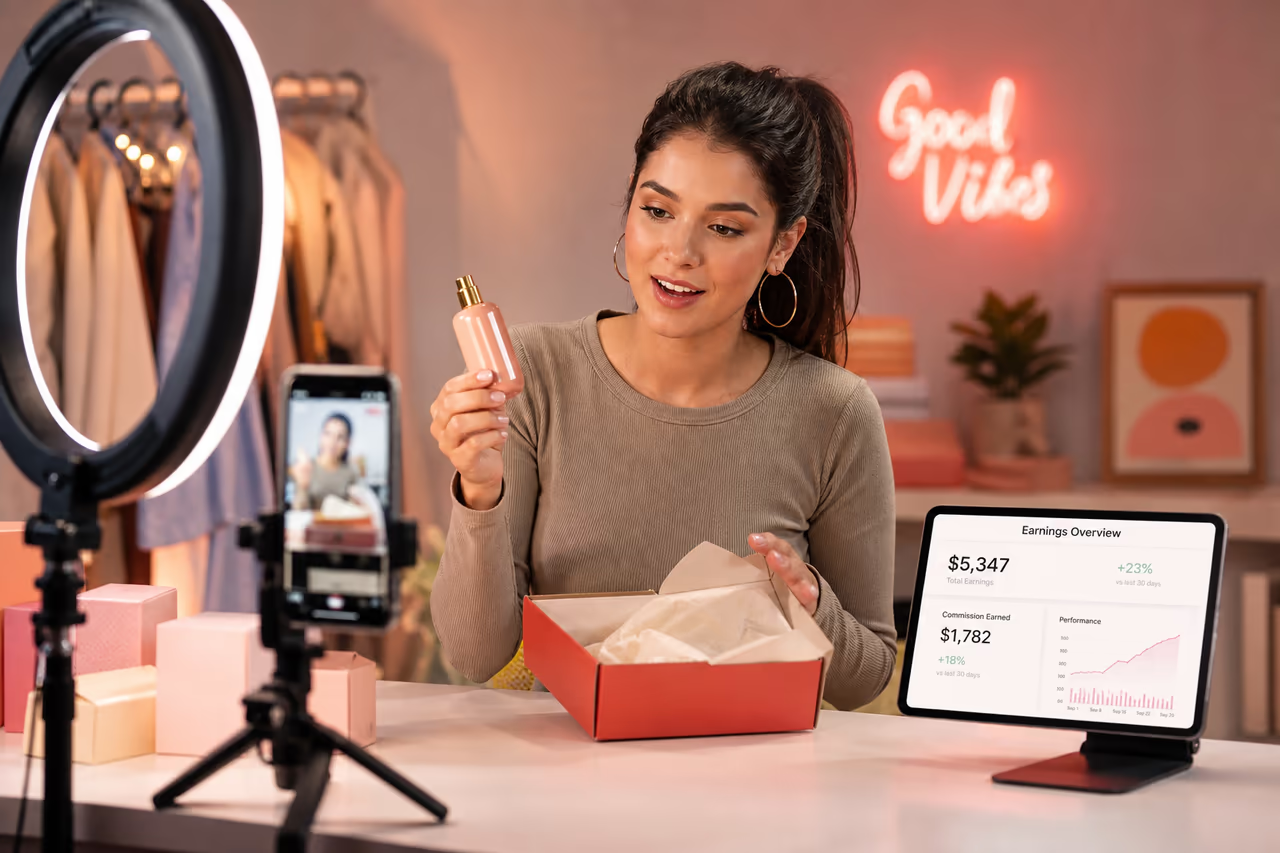
Traditional flat-fee sponsorships are shifting toward performance-based commission models. Creators are directly sharing in the sales they generate, creating a massive new income stack.
- TikTok Shop Affiliates: Earn 5–30% commission per sale, purely performance-based.
- YouTube Shopping: Creators earn 10–25% commission on integrated product content.
- Marketplace Platforms: Brands and creators use networks like Wayo Ads for pay-per-view or CPM-based campaigns to drive broader awareness.
For a creator, a single viral video earning a $15 commission on 500 sales ($7,500) rivals a mid-tier flat-fee brand deal. More importantly, commission income compounds as the content stays live.
Building a Winning Strategy
To get the highest return on investment, brands must treat social commerce as a distinct performance channel.
- Match the Platform to the Product: Run visually demo-able, impulse products ($20–$60) on TikTok Shop. Reserve considered purchases ($80+) that require explanation for YouTube Shopping.
- Layer Creator Types: Use open affiliate plans (10–12% commission) to attract volume and build initial sales velocity. Simultaneously, run targeted plans with vetted creators at higher rates (18–25%) to scale reliable revenue.
- Harness User-Generated Content (UGC): Consumers trust real people using products. Source UGC manually or through discovery tools and feature it in shoppable on-site galleries to bridge social proof with e-commerce.
- Optimize the Link-in-Bio: For traffic that doesn't convert in-app, use a dedicated landing hub to direct users to specific product pages, seasonal picks, or campaigns.
- Measure the Halo Effect: Implement cross-channel attribution. Measuring platform-specific dashboards alone undercounts the true ROI of your campaigns.

Leading Brands in Action
- CB2: Integrates creators and UGC seamlessly into its strategy, linking social inspiration directly to its website to influence conversions.
- eos: Monitors social engagement to spot what its audience is excited about, using those demand signals to drive quick momentum and sales.
- Urban Outfitters: Tracks viral trends closely (like the viral tomato lamp) and uses active, flexible bio links to point followers to trending products before they sell out.
Social commerce is the new default purchase path. Brands that scale successfully will leverage both rapid-conversion channels like TikTok and trust-building platforms like YouTube, backing their creator content with accurate cross-platform measurement.
Join [Wayo Ads](/) today and start running creator campaigns that actually pay the bills.
Sources
- Social Commerce and TikTok Shop Stats (2026)
- YouTube Shopping vs TikTok Shop: 2026 Comparison | ThoughtLeaders Blog
- (PDF) Social Commerce
Source & Resources
Official documentation, research, and high-authority sources: