How to Turn Free Brand Offers Into Paid Multi-Thousand Dollar Partnerships

Most creators have a folder full of emails that start the same way: "We'd love to offer you a complimentary..." A free hotel stay. A gifted product. An invite to an exclusive event. The brand gets content, exposure, and credibility. The creator gets a nice experience and maybe a few Instagram stories.
But what if that free offer was actually a paid deal waiting to be negotiated?
Charlotte, a travel and aviation creator, turned a single free event invite into a paid, multi-thousand dollar brand partnership. She didn't have a massive following. She didn't have an agent. She had one strategic email and a system for knowing when to say yes — and when to push back.
This article breaks down exactly how she did it, and how you can apply the same framework to your own inbox.
Why Most Creators Leave Money on the Table
The default response to a free offer is binary: accept it or decline it. Creators either say yes because the experience sounds fun, or they say no because they're "too busy" or "don't work for free."
Both responses miss the point.
A gifted offer is not a yes-or-no question. It's an opening. The brand has already signaled that they value your audience and your content. They've already done the hard part — identifying you as a creator worth investing in. What they haven't done is put a dollar amount on that value.
That's your job.
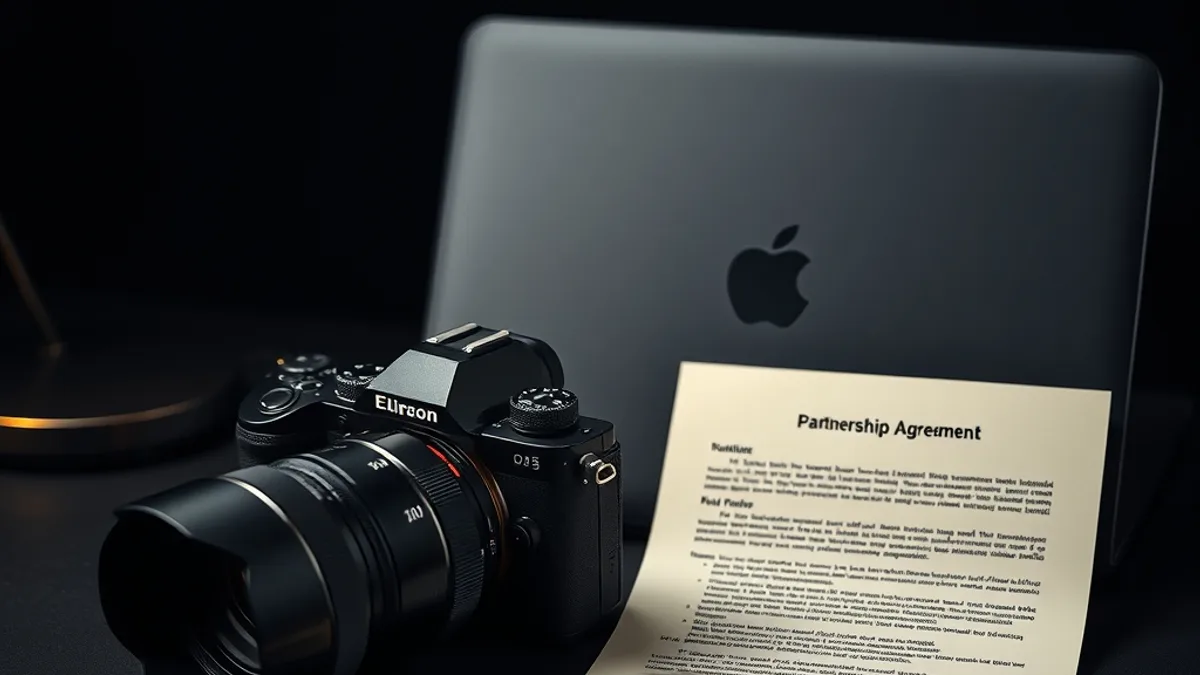
When Charlotte received a free invite to an aviation event, she didn't reply with "Thanks, I'd love to come!" and she didn't reply with "I don't work for free." Instead, she sent one email that reframed the entire opportunity: she proposed a paid package that combined UGC deliverables with influencer content.
The brand said yes. One email. Multi-thousand dollar partnership.
The Reframe: From Gifted to Paid Package

The core move is simple in concept but rare in practice: take the free offer and reframe it as a paid collaboration with clear deliverables.
Here's what that looks like in practice:
- Acknowledge the offer genuinely. Thank them for thinking of you. Show enthusiasm for the brand or event.
- Reframe the scope. Explain that while you appreciate the complimentary invite, you'd love to explore a more comprehensive partnership.
- Package your deliverables. Propose a UGC + influencer bundle: a set number of short-form videos for their organic channels, plus a dedicated post or story series on your own platforms.
- Attach a rate. Give a clear price for the package. Don't apologize for it.
The key is positioning. You're not asking for a handout. You're offering a more valuable version of what they already wanted.
Brands often send free offers because they're testing the waters. They don't know if you're open to paid work, and they don't want to risk rejection. When you respond with a professional, packaged counter-offer, you signal that you're a business partner, not a fan.
The Vine Swing Method: When to Say Yes to Free
Not every free opportunity should be converted into a paid deal. Some should be accepted as-is. Some should be declined entirely.
Charlotte uses what she calls the "Vine swing" method to evaluate free opportunities. The idea is simple: imagine you're swinging on a vine through a jungle. Each opportunity is a vine. You only grab the next vine if it has enough momentum to carry you forward.
A free opportunity is worth accepting when:
- It gives you access to a location, event, or person you couldn't reach on your own.
- It produces content that will perform well on your channel regardless of the brand.
- It builds a relationship with a brand you want to work with long-term.
- It fills a gap in your portfolio or gives you credibility in a new niche.
A free opportunity is not worth accepting when:
- It costs you more in time, travel, or opportunity cost than the content is worth.
- It's a one-off with no clear path to a paid relationship.
- The brand has a history of never paying creators.
- You're saying yes out of guilt or fear of missing out.
The Vine swing method forces you to evaluate momentum, not just the immediate offer. A free trip to a destination you've been dying to film? That's a vine with momentum. A free product that doesn't fit your niche and will sit in a drawer? That's a dead vine.
The $3 Thank-You Card That Beats a Follow-Up Email
Here's a counterintuitive truth: in a world of automated follow-up sequences and CRM tools, a $3 physical thank-you card can outperform a perfectly crafted email.
Charlotte cites this as one of her most effective trust-building gestures. After a brand interaction — whether it's a meeting, a call, or even a rejection — she sends a handwritten card. It costs three dollars and takes five minutes.
The impact is disproportionate.
Brand managers receive hundreds of emails a day. They delete most of them. But a physical card sits on a desk. It gets opened. It gets remembered. It signals something that no email can: you took the time.
This matters because brand deals are built on relationships, not transactions. The brand manager who remembers your thank-you card is the brand manager who thinks of you when a paid campaign opens up.
Follow-Up After a "No" Is Where Deals Are Won
Most creators treat a "no" as the end of the conversation. It's not. It's the beginning of a longer game.
Charlotte works with government and embassy clients — organizations known for slow-moving, high-red-tape decision processes. These deals don't close in a week. They don't close in a month. They close after multiple touchpoints, repeated follow-ups, and a lot of patience.
The system that works:
- Schedule every follow-up. Don't rely on memory. Put it in your calendar.
- Vary the touchpoint. Email, then LinkedIn message, then a physical card, then a phone call.
- Add value each time. Don't just say "checking in." Share a relevant stat, a new piece of content, or an idea for the campaign.
- Know when to pause. If you've followed up five times with no response, step back. Revisit in three months.
The creators who win paid deals are not always the most talented. They're the ones who stay in the conversation when everyone else has gone quiet.
LinkedIn: The Underused Channel for Reaching Decision-Makers
Influencer platforms are crowded. Every creator is pitching the same brand managers through the same portals. The competition is brutal, and the rates are often driven down by the platform's own dynamics.
LinkedIn is different.
Charlotte uses LinkedIn to reach brand decision-makers directly. Not the influencer marketing coordinator. Not the social media intern. The people who actually control budgets: marketing directors, brand managers, heads of partnerships.
Why LinkedIn works:
- Decision-makers are active there. They're not scrolling Instagram looking for creators. They're on LinkedIn doing their jobs.
- The noise is lower. Most creators don't use LinkedIn for outreach. Your message stands out.
- The context is professional. A LinkedIn message reads as a business proposal, not a fan request.
The approach is simple: find the right person, send a concise message that references their brand and your relevant work, and propose a specific collaboration. No long pitches. No attachments. Just a clear, professional opening.
B2B vs B2C: Tailoring Your Content Strategy
One of the most overlooked aspects of brand deal strategy is the difference between B2B and B2C audiences.
If you're targeting consumer brands — fashion, food, travel, beauty — your content should be optimized for consumer appeal. High energy, emotional hooks, lifestyle integration.
If you're targeting corporate or government clients — airlines, tourism boards, embassies, tech companies — your content needs a different register. More professional, more data-driven, more focused on credibility and reach.
Charlotte's aviation and travel niche sits at the intersection of both. She tailors her pitch and her content depending on who she's talking to. A tourism board wants to see destination content that drives visits. An airline wants to see content that builds brand affinity and showcases the in-flight experience.
The takeaway: don't use the same pitch for every brand. Understand who you're talking to and what they actually care about.
Building Your Own Conversion System
Charlotte's success isn't magic. It's a system. Here's how to build yours:
- Audit your current free offers. Look at every gifted opportunity you've received in the last six months. Which ones had momentum? Which ones did you accept out of obligation?
- Create a reframe template. Write a response template that acknowledges the offer, reframes it as a paid package, and includes your rates. Customize it for each brand.
- Set up your follow-up calendar. Every brand conversation gets a follow-up schedule. No exceptions.
- Buy a pack of thank-you cards. Seriously. Keep them on your desk.
- Optimize your LinkedIn profile. Make sure it clearly states what you do and who you work with. Then start reaching out.
The creators who consistently land paid deals are not the ones with the most followers. They're the ones with the best systems.
Free offers are not the enemy. They're the top of your funnel. The question is whether you have a system to move them from free to paid.
What to do next
Discover brand opportunities on Wayo Ads
Source & Resources
Official documentation, research, and high-authority sources: