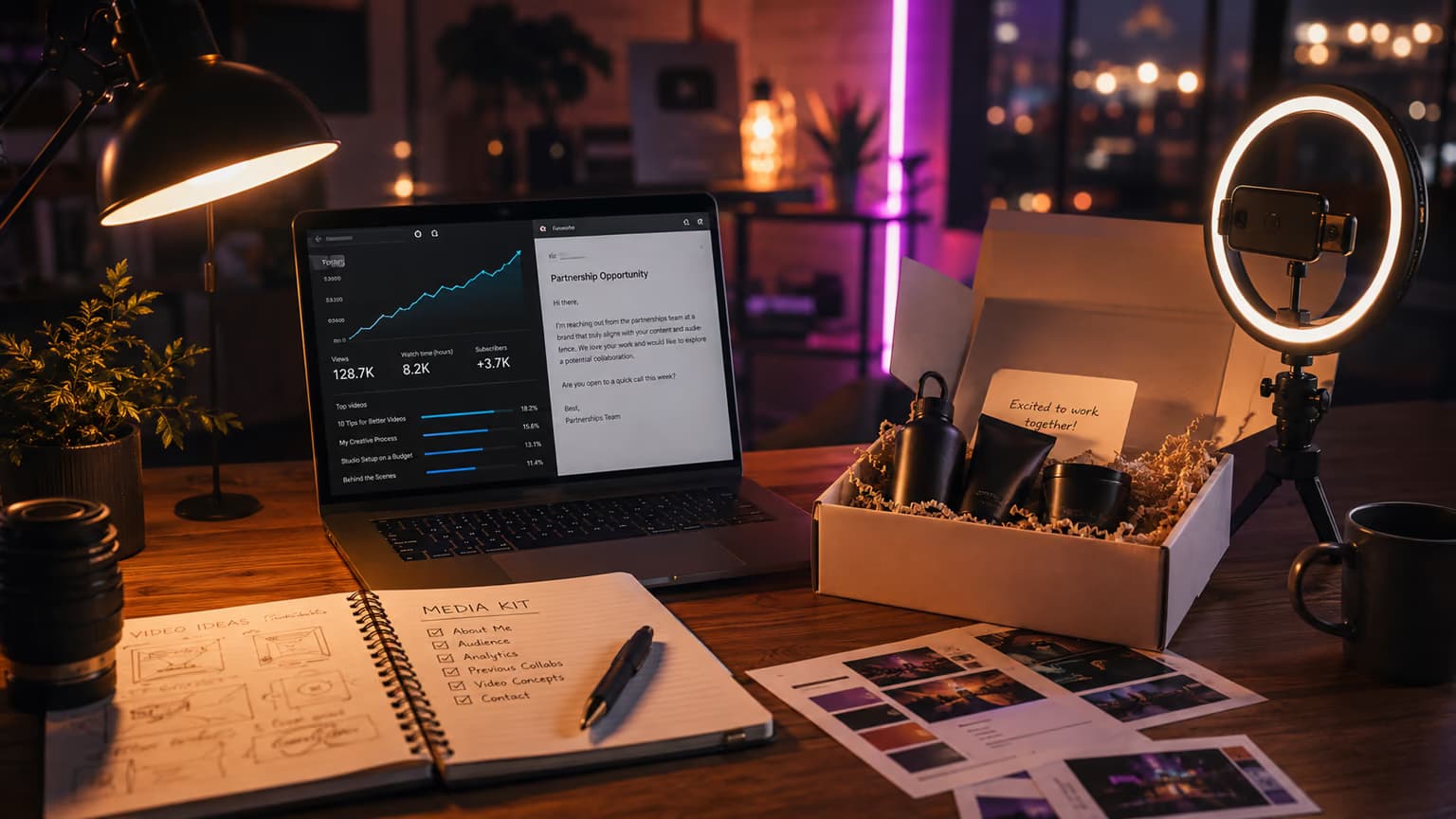
You’ve been posting consistently, growing your audience, and creating solid content—yet brand deals still feel out of reach. Many independent YouTube creators hit this exact stage: views are coming in, but paid partnerships are not.
The good news is that you do not need millions of subscribers or a talent agent. Brands increasingly work with mid-size and even micro creators who have clear niches, engaged audiences, and professional presentation. The creators who land deals treat sponsorships as a repeatable skill rather than a lottery.
This guide walks you through exactly how to position your channel, find opportunities, pitch effectively, price fairly, deliver results, and turn that first “yes” into ongoing revenue.
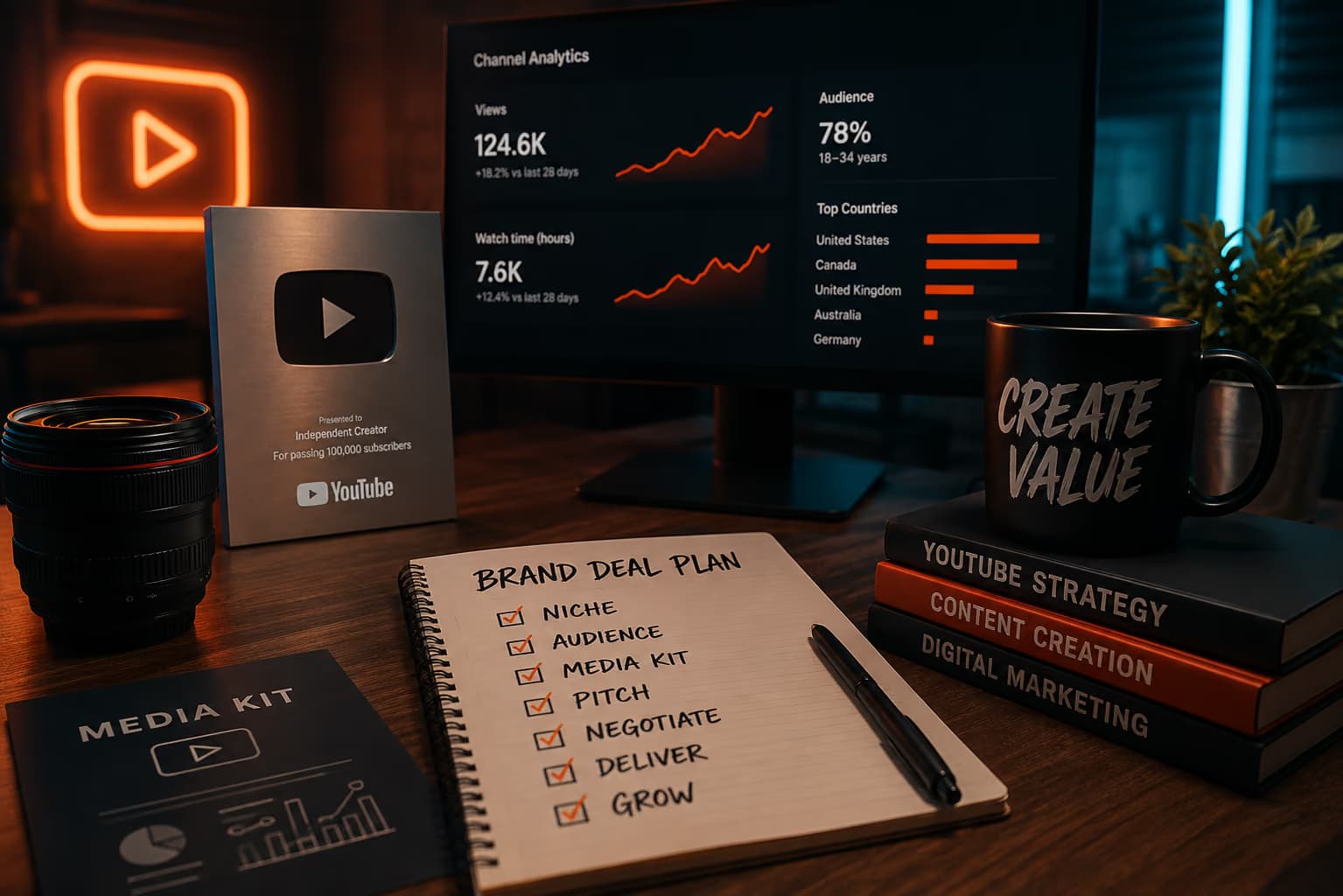
What Brands Are Actually Buying
A brand deal is more than a paid mention. Brands buy access to the trust and attention you have already built with your audience—something traditional ads struggle to replicate.
They evaluate three main things:
- Relevance — Does your content naturally align with their product or service?
- Engagement — Do people actually respond (comments, saves, shares, watch time)?
- Consistency — Do you post regularly enough for a partnership to make sense?
A creator with 20,000 highly engaged viewers in a focused niche often outperforms a larger channel with low interaction. Micro and mid-tier creators are in demand precisely because their audiences feel more authentic and convert better.
Common deal types include:
- Integrated sponsored mentions inside regular videos
- Dedicated sponsored videos
- Affiliate or performance-based arrangements
- Gifted/product sampling (often a starting point)
- Longer-term brand ambassador or retainer relationships
- UGC (user-generated content) created for the brand’s own channels or ads
Anytime you partner with a brand or receive a product in exchange for content, you typically have disclosure obligations. Build that into the brief, not as an afterthought.
Phase 1: Make Your Channel Brand-Ready
Before you pitch anyone, your channel needs to pass a quick “brand manager test.” In about 60 seconds someone should be able to tell who you help, why your audience trusts you, and whether a product would fit. That is the same scan brands run before they approve a creator.
Focus on the metrics brands actually care about
Subscriber count is secondary. Prioritize:
- Average views over the last 30–90 days
- Average view duration / retention
- Engagement rate
- Audience demographics (age, location, interests)
- Clear niche alignment
- Consistent posting
A finance or B2B creator averaging 20,000 views can realistically command far higher rates than a general entertainment or gaming creator with the same views because the audience is higher-intent.
Turn your channel page into a sales page
- Write a clear niche-focused description (“Helping freelance designers build profitable client businesses”)
- Organize strong playlists
- Use clean, professional branding and consistent thumbnails
- Put a business email in the About section
- Link other platforms and any website or newsletter
Create a simple media kit
This is your one-page professional résumé. Include:
- Short bio and niche
- Average views and recent performance
- Audience demographics
- Engagement and retention highlights
- Past collaborations (even small or unpaid ones)
- Contact information
Canva templates make this fast. A clean media kit immediately signals that you take partnerships seriously.
Phase 2: Find and Land Opportunities
Successful creators use multiple channels at once.
1. YouTube Creator Partnerships
Available inside YouTube Studio (Earn tab) for Partner Program members in supported countries. Brands discover creators through Google’s tools, and Gemini helps with matching. When a brand expresses interest you can share deeper analytics. Final contracts and payments happen directly between you and the brand—always get a signed agreement before filming.
YouTube’s own tips for getting brand deals also recommend turning on Creator Insights Sharing in Studio. Sharing insights can increase how often you surface in brand search; you can still be discovered with it off, but the extra data helps brands pick a fit. For how the 2026 product layer actually works, see YouTube Creator Partnerships in 2026.
2. Sponsorship marketplaces and platforms
Create complete profiles on a few platforms so brands can find you. Popular options include Collabstr, Grapevine, AspireIQ, Passionfroot, impact.com, and others focused on creator campaigns or UGC. Fill out every section, add examples of your best content, and apply consistently.
3. Direct outreach
This remains one of the highest-ROI methods, especially in defined niches.
- Identify brands already sponsoring similar creators (look for sponsored segments, affiliate links, and discount codes in competitor videos).
- Find the right contact (Influencer Marketing Manager, Partnerships Manager, Creator Partnerships, etc.) via LinkedIn, the brand’s website, or email-finding tools.
- Send a short, personalized pitch.
A strong pitch follows a simple structure:
Brief intro → Why this brand fits your audience → Specific video concept → Key metrics (average views, demographics, engagement) → Clear next step + media kit link.
Keep it concise (6–8 sentences). Lead with value, not subscriber count. Follow up once after a week if needed, then move on.
Phase 3: Price, Negotiate, Deliver, and Scale
Know typical ranges (2026 benchmarks)
Rates vary widely by niche and performance, but rough integrated sponsorship ranges look like:
| Subscribers | Typical integrated sponsorship |
|---|---|
| 1K–10K | $100–$500 |
| 10K–50K | $500–$3,000 |
| 50K–100K | $2,500–$7,000 |
Niche matters more than size. Finance, software, and B2B often see much higher CPMs ($40–$150+) than gaming or general lifestyle. Dedicated videos and packages with extras (Shorts, usage rights, exclusivity) command more. For the negotiation mechanics behind those numbers, see How to Price Your First Brand Deals.
Structure smarter deals
- Flat fee (most common)
- CPM-based
- Hybrid (flat + affiliate or performance bonus)
- Bundles (video + Shorts + community post + usage rights)
Negotiate usage rights, exclusivity periods, and revision limits—these often add significant value.
Deliver results that lead to repeats
- Confirm everything in writing and meet deadlines early.
- Stay authentic to your voice while meeting the brief.
- Track performance and send a short post-campaign report with views, engagement, and insights.
- Follow up with a thank-you note and a suggestion for a future collaboration or package.
One successful campaign frequently leads to easier, higher-paying repeat work.
Building Beyond the First Deal
Treat that first sponsorship as the start of a system:
- Package your services into clear, reusable offers.
- Layer in performance-based or affiliate elements where it fits.
- Explore UGC work (creating content for brands to use on their own channels).
- Aim for retainers or multi-video packages once trust is established.
Brand deals work best as one stream among several. Many independent creators also combine them with AdSense, affiliates, digital products, memberships, and performance-based platforms (Creator Monetization Beyond AdSense). Tools like Wayo Ads give creators another way to monetize validated views and connect with brands without high follower thresholds—making it a practical complement while you build sponsorship momentum.
Your First Action Steps This Week
- Clarify your niche positioning and update your channel description and About section.
- Build or refine a simple media kit.
- Join YouTube Creator Partnerships (if eligible) and create profiles on two marketplaces.
- Identify 5–10 brands already working with similar creators and send your first personalized pitches.
Landing your first brand deal is less about waiting to be discovered and more about clear positioning, proactive outreach, and professional delivery. Once you close one, the process becomes far more repeatable—and the foundation for a real creator business.