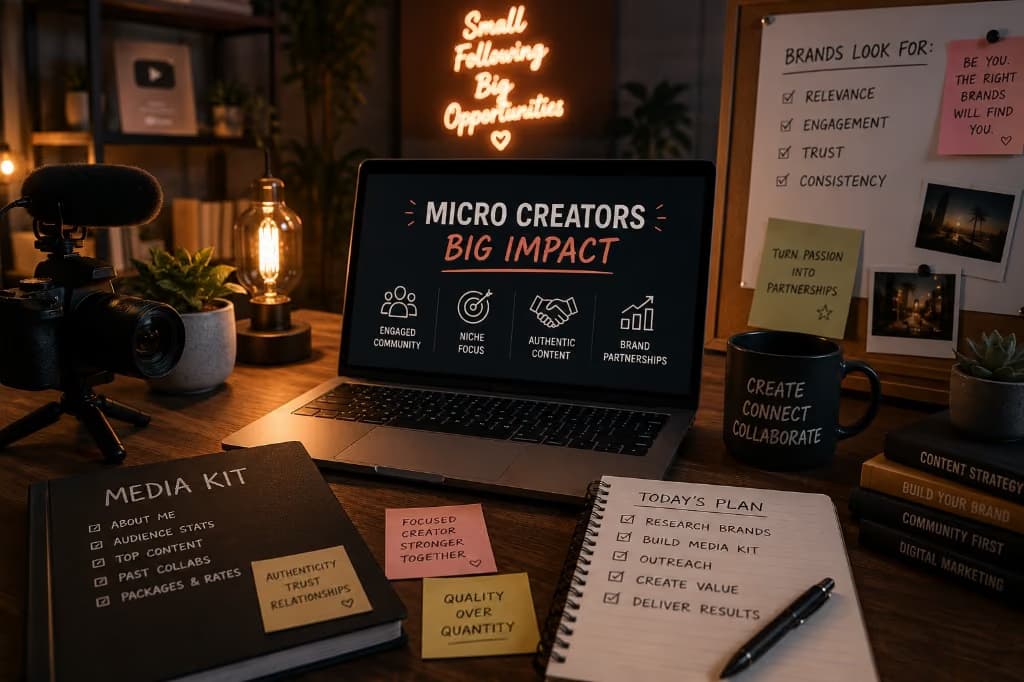
You do not need hundreds of thousands of followers to land brand deals. In fact, many brands now actively prefer working with micro-creators—typically those with 1,000 to 100,000 followers—because smaller, focused audiences often deliver better results than large but loosely engaged ones.
Consumers increasingly want authenticity. Roughly 47% say they want it from influencers even in sponsored content, and about 40% prefer interacting with micro- and nano-creators. Brands have noticed: micro-influencer campaigns regularly achieve engagement rates several times higher than broader branded content, and overall influencer marketing can return strong ROI when done with the right partners.
For independent YouTube (and multi-platform) creators, this shift is an opportunity. Here is how micro-creators win sponsorships—and how to position yourself to capture them.
Why Brands Choose Micro-Creators
Large followings come with drawbacks for brands: higher cost, lower flexibility, and sometimes diluted authenticity. Micro-creators often beat mega-influencers on the metrics that actually move a campaign:
- Higher engagement and trust — Smaller communities often treat recommendations more like advice from a knowledgeable friend. Comments, saves, and shares tend to be stronger relative to audience size. Nano accounts commonly sit in a 4–8% engagement band; micro in 2–5%; mega often below 1% (Gen3 Marketing).
- Better cost efficiency — Rates are more accessible, allowing brands to work with multiple creators or run tests without enterprise budgets.
- Niche expertise — Micro-creators frequently specialize deeply. Brands can reach highly relevant audiences that macro accounts struggle to target precisely.
- Flexibility and availability — Fewer competing demands often mean faster turnaround and more collaborative relationships.
- Valuable content — Brands gain not only sponsored posts but reusable user-generated content (UGC) for their own channels and ads.
A creator with a tight, engaged following in a specific city, interest, or problem area can outperform a much larger generalist account on relevance and conversion.
Industry tiers overlap a bit by platform, but the useful map is: nano 1K–10K, micro 10K–100K. Brands that win treat that range as a portfolio, not a consolation prize.
What Actually Matters More Than Follower Count
Brands evaluate fit first. That is the same scan described in What Brands Look for Before Approving a Creator. Key signals include:
- Clear niche alignment with the product or service
- Strong engagement quality (not just vanity metrics)
- Content style and tone that feels natural for a brand integration
- Consistency of posting and professional presentation
- Audience demographics that match the brand’s target
A nano or micro creator who already uses and talks about products in a category will almost always beat a larger creator whose audience has no natural connection to the brand. Engagement quality also drives payouts more reliably than a plaque on the wall.
How Micro-Creators Land and Win Deals
1. Make fit obvious
Your channel, bio, and content should immediately communicate who you help and what you stand for. Brands scanning profiles decide quickly. A focused niche plus consistent theming makes the match easy to see.
2. Build professional signals
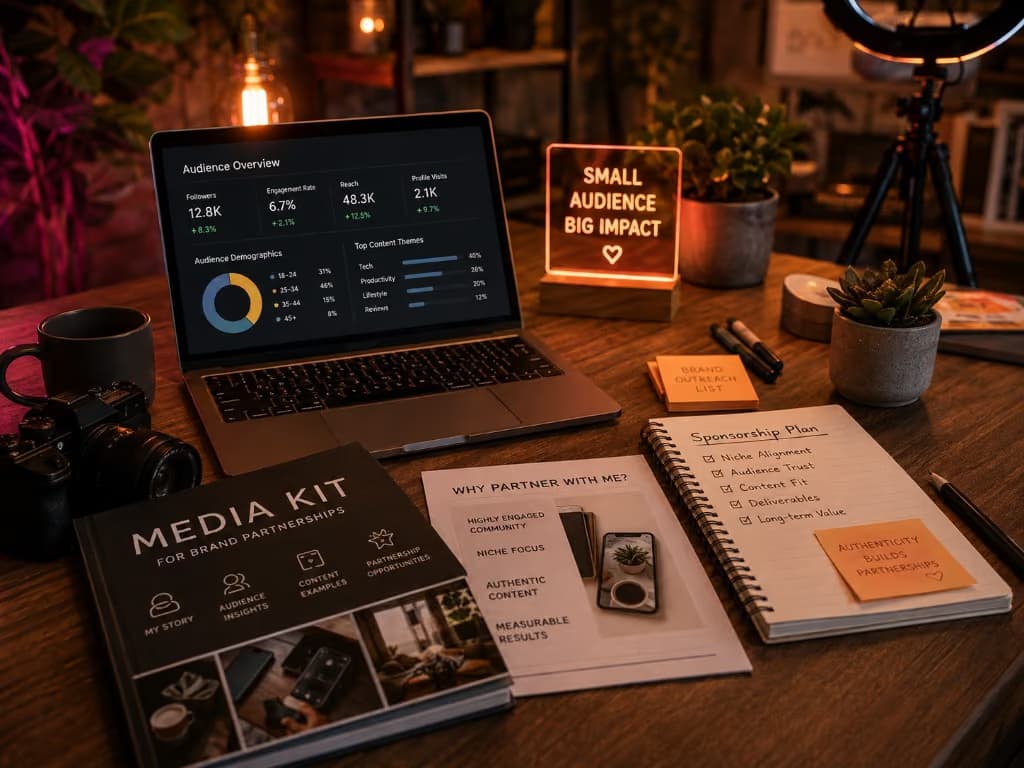
A simple media kit with average views, engagement highlights, audience insights, and examples of past work (even unpaid or UGC) removes friction. Clean branding, a visible business email, and organized playlists or highlights further raise confidence. The full setup is in Landing Your First Brand Deal.
3. Get discoverable
- Complete profiles on creator marketplaces and collaboration platforms.
- Use clear language in bios (“Open to partnerships” or similar).
- Engage thoughtfully with brands whose products already fit your content.
- Feature products you genuinely use so organic interest becomes visible.
4. Pitch with relevance, not size
When reaching out, lead with why the brand fits your audience and a specific content idea. Share performance context (average views, engagement, demographics) rather than leading with subscriber count. Short, personalized messages outperform generic ones.
5. Deliver authentic, professional results
Brands respond best to content that feels native to the creator’s usual style. Overly scripted integrations underperform—the same lesson as briefing without killing authenticity, from the other side of the table. Meet deadlines, communicate clearly, track results, and send a brief performance summary afterward. Reliability turns one deal into the next.
Realistic Pricing and Deal Structures for Micro-Creators
Typical ranges vary by platform, niche, and engagement, but micro-tier posts often fall in accessible brackets (hundreds rather than tens of thousands). Directional 2026 bands look like:
| Tier | Followers | Typical post fee |
|---|---|---|
| Nano | 1K–10K | $50–$300 |
| Micro | 10K–100K | $300–$2,000 |
Niche, retention, and extras move those numbers more than the tally. Hybrid models—flat fee plus affiliate or performance elements—are increasingly common and can increase long-term earnings. For how to unbundle usage rights and floors, see How to Price Your First Brand Deals.
You can also raise value by packaging deliverables (video + Shorts or Stories, usage rights, exclusivity periods) and by offering UGC that brands can repurpose. Usage rights and multi-post packages frequently justify higher fees.
Turning One-Off Deals into Ongoing Income
The real advantage for micro-creators is relationship potential. Brands that find a good fit prefer repeating partnerships because trust compounds and content feels more natural over time.
After a successful campaign:
- Share performance data and insights.
- Suggest logical next concepts or a small retainer/package.
- Stay consistent in your niche so the brand continues to see you as the natural partner.
Building a small roster of recurring brand relationships usually produces more stable income than chasing one-off large deals. That is also how brands themselves are told to operate: a roster of 10–15 consistent micros beats a single hero post (Influee).
Broader Strategy Notes
Micro-creators win by treating sponsorships as a system: clear positioning, proactive discovery and outreach, authentic delivery, and measurement. Brands that succeed with influencer marketing set goals first, prioritize fit over follower count, brief for authenticity rather than heavy control, and track results from day one. Creators who make those priorities easy to evaluate gain an edge.
Sponsorships work best as one stream among several. Many independent creators also combine them with platform ad revenue, affiliates, digital products, and performance-based options (Creator Monetization Beyond AdSense). Platforms like Wayo Ads give micro-creators another path to monetize validated attention and connect with brands without requiring massive followings—making it a practical complement while sponsorship momentum builds.
Bottom Line
Massive followings are no longer the main ticket to brand deals. Brands increasingly value relevance, engagement quality, authenticity, and efficiency—qualities many micro-creators deliver better than larger accounts. By making your niche and value obvious, presenting professionally, pitching with specificity, and delivering reliably, independent creators can win sponsorships and turn them into repeatable income long before they reach “big” numbers.
Start with the signals brands already look for, then make it easy for the right partners to say yes.